
LED teeth whitening has become one of the most popular treatments on salon menus across Australia, and it is easy to see why. It is quick, generally comfortable and does not involve anything close to a dental drill. But if you have never had it done before, it is completely normal to have questions about what actually happens, how much of a difference to expect, and whether it is right for you. Here is a straightforward explanation, without the overblown promises.
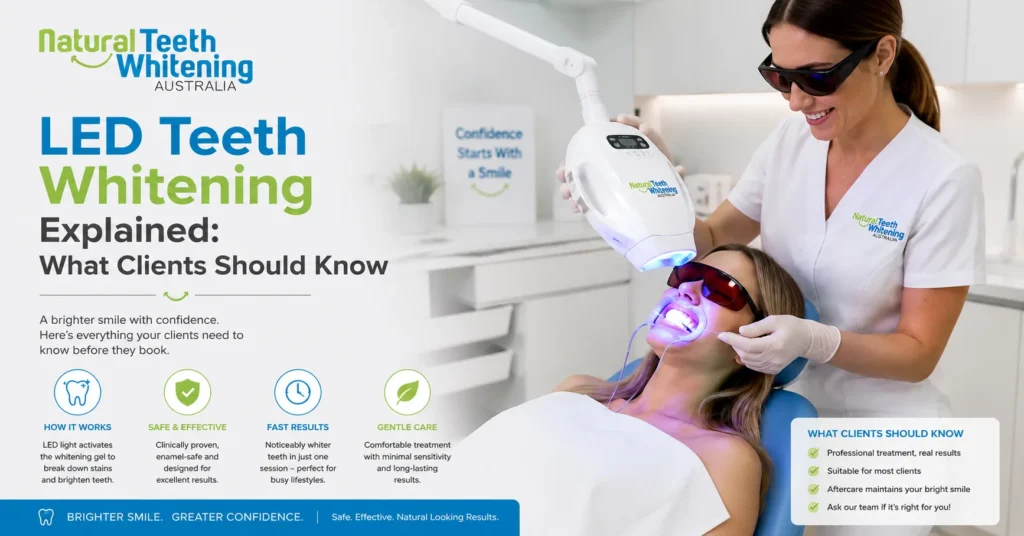
How LED Teeth Whitening Actually Works
LED teeth whitening pairs a whitening gel with a low-heat LED light. The gel contains a whitening agent that is applied to the surface of the teeth, and the LED light is used alongside it. The general idea is that the light helps activate the gel more efficiently than the gel would work sitting on its own, which is why treatments are often shorter than some traditional whitening methods.
It is worth being upfront that results vary a lot from person to person. Factors like your natural tooth shade, the type of staining you have and how porous your enamel is all play a role in how noticeable the change will be. Coffee and red wine staining generally responds differently to staining caused by certain medications or ageing, for example, so nobody can honestly promise an identical result for every client.
What Actually Happens During a Session
A typical LED whitening appointment follows a fairly consistent process from salon to salon. Here is what you can generally expect step by step.
| Step | What Happens | Why It Matters |
| 1 | Shade recorded | A shade guide is used to note your starting shade, giving an honest reference point to compare against afterwards |
| 2 | Lips and cheeks retracted | A cheek retractor keeps lips and cheeks comfortably out of the way so the whole treatment area is accessible |
| 3 | Gums protected | A gum protector gel is applied and cured to shield soft tissue from the whitening gel |
| 4 | Whitening gel applied | Gel is applied evenly across the front surface of the teeth |
| 5 | LED light activated | The light is positioned in front of the teeth for a set cycle, generally in short rounds rather than one long sitting |
| 6 | Shade re-checked | Comparing against the recorded starting shade gives an honest, consistent way to track change |
Most sessions run for around 30 to 45 minutes in total, often broken into a few shorter light cycles rather than one continuous exposure. Your therapist should talk you through each step before starting, so you always know what is happening and why.
Is It Comfortable? What to Expect
Most people describe LED whitening as straightforward and comfortable rather than painful. There is no drilling and no injections involved. That said, it is honest to say that some people do experience mild, temporary tooth sensitivity during or shortly after treatment, particularly if they already have sensitive teeth. This usually settles down within a day or so.
- The cheek retractor can feel a little unusual at first, but most clients get used to it quickly.
- You may notice a mild tingling sensation while the gel is active, which is generally normal.
- If you have known sensitive teeth, mention this before your appointment so your therapist can adjust the treatment accordingly.
- Bring sunglasses or ask if they are provided, since some people prefer to shield their eyes from the LED light during treatment.
Setting Realistic Expectations
This is the part worth reading carefully. LED teeth whitening is a cosmetic treatment, not a dental procedure, and it will not fix every type of discolouration. It generally works best on surface staining rather than discolouration coming from inside the tooth, such as staining caused by certain antibiotics or trauma to the tooth. Results are also not permanent. Ongoing exposure to staining foods and drinks, along with everyday wear, will gradually affect the result over time, which is why many clients choose occasional top-up sessions or touch-ups.
A reputable provider will be upfront that everyone’s starting point and results are different, rather than promising a specific number of shades lighter. If a claim sounds too good to be true, or too uniform across every client, it is worth asking more questions before booking.
Tracking Progress With a Shade Guide
One of the simplest ways a salon can be transparent with clients is by using a shade guide before and after treatment. Recording your starting shade gives both you and your therapist an honest reference point, rather than relying on memory or a general impression. It also means any change can be discussed in specific, consistent terms rather than vague claims.
If you are a client, it is completely reasonable to ask your therapist to show you the shade guide before and after your session. If you run a salon and are looking to add this step to your treatment process, our professional whitening supplies range includes the accessories needed to track shade consistently as part of your client process.
Looking After Your Results Afterwards
- Avoid strongly staining foods and drinks such as coffee, red wine, tea and dark sauces for at least 24 to 48 hours after treatment.
- Rinse your mouth with water after eating or drinking anything that could stain in the days following treatment.
- Stick to a normal oral hygiene routine, since good brushing habits help maintain results over time.
- If you want to top up your results between salon visits, an at-home teeth whitening kit or a whitening pen can be a convenient way to maintain your shade in between appointments.
Who Should Speak to a Dentist First
LED teeth whitening is not suitable for everyone, and a responsible provider will ask a few questions before going ahead. It is worth checking with a dentist first if you have active cavities or gum disease, are pregnant or breastfeeding, have braces or very recent dental work, or have a history of significant tooth sensitivity. This is general information rather than personal advice, so if you are ever unsure whether whitening is appropriate for you, a quick chat with your dentist is the safest first step.
For Salons Considering Adding LED Whitening
If you are a salon or clinic owner exploring LED whitening as a new service, being able to explain the process honestly and confidently to clients is just as important as the equipment itself. Our teeth whitening machines come with complimentary training, and our Start Up Business Opportunities page runs through what is involved in adding this service to your menu. You can also browse our Training and Marketing resources for guidance on running consistent, client-friendly sessions.
Businesses looking to stock our products or explore trade pricing can find out more by becoming a stockist, or get in touch through our contact page with any questions.
Frequently Asked Questions
Does LED teeth whitening damage tooth enamel?
When used as directed with a suitable whitening gel, LED whitening is generally considered a low-risk cosmetic treatment. As with any whitening method, it is not intended for excessive or overly frequent use, and anyone with concerns about their enamel should check with a dentist first.
How long do LED teeth whitening results last?
Results vary from person to person and depend heavily on diet and oral habits afterwards. Many clients notice results fading gradually over weeks to months, which is why occasional touch-ups or at-home maintenance products are commonly used.
Is LED teeth whitening painful?
Most clients describe it as comfortable rather than painful, though some experience mild, temporary sensitivity, particularly if their teeth were already sensitive beforehand.
How is LED whitening different from at-home whitening strips?
LED whitening pairs a light source with a professional-strength gel in a single supervised session, while strips are typically used unsupervised over several days at home. Many people use both, choosing an in-salon session for a noticeable initial result and at-home products for ongoing maintenance.
Can I have LED teeth whitening if I have sensitive teeth?
It may still be possible, but it is worth mentioning sensitivity to your therapist beforehand so the treatment can be adjusted, and checking with your dentist if your sensitivity is significant or ongoing.
How often can I safely have LED teeth whitening done?
This varies depending on the specific product and your own teeth, so it is best discussed with your treatment provider rather than following a generic rule. Spacing sessions out and following aftercare guidance generally supports better long-term results than frequent, closely spaced treatments.
Thinking About Trying LED Whitening?
Understanding the process before you book makes for a much better experience, whatever provider you choose. If you would like to explore products for use at home, browse our LED whitening lights and kits, or if you are a salon owner wanting to add this service, get in touch with our team to find out more.