
A brighter smile can instantly boost your confidence, improve your looks, and leave a lasting impression, honestly. Whether you’ve just finished a professional whitening treatment, or you used a premium at-home whitening kit, doing the right teeth whitening aftercare is essential if you want to savor those results for as long as possible.
A lot of people put their money into teeth whitening but they sort of ignore the aftercare part, which is kind of a shame. The truth is that what you eat, what you sip, and even what you avoid in the days and weeks after treatment can really change how long your whitening effect stays around.
In this guide, we’ll explain everything you need to know about teeth whitening aftercare, including the recommended white diet after teeth whitening, foods and drinks to avoid, maintenance tips and how long teeth whitening lasts.
Why Teeth Whitening Aftercare Is So Important
Teeth whitening treatments work kind of by lifting surface stains from the enamel and, sort of, breaking down discolouration inside the tooth structure. Right after whitening, your teeth may temporarily feel more porous, mainly because they rehydrate again.
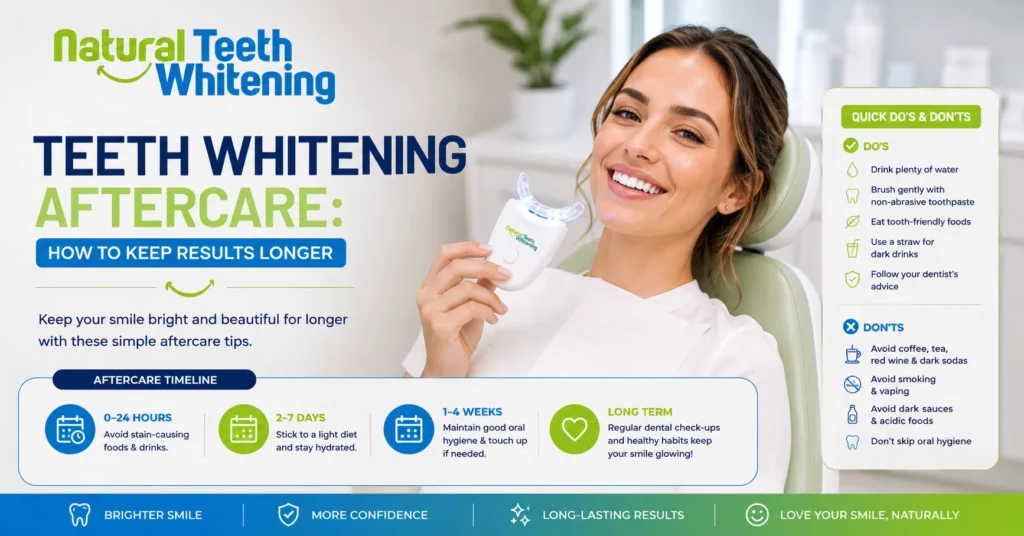
In this short window, the teeth are more likely to soak up coloring from meals and drinks. That’s why dental professionals often advise a solid after care routine, in particular during the first 24 to 48 hours, and not only because of how it looks. If you stick with the proper aftercare guidelines, it may help:
• Help keep your brighter smile around for longer
• Reduce the risk of fresh stains forming
• Support enamel wellbeing
• Extend the overall whitening longevity
• Maximise the value of what you’ve invested in for whitening
Basically, if your aftercare routine is better, then your results will probably last that bit more, without such a quick fade, or stuff like that.
What Happens to Your Teeth Immediately After Whitening?
After a whitening treatment, The enamel goes through a bit of a temporary dehydration process. And, as your teeth naturally rehydrate, they can be more vulnerable to pulling in colour pigments from foods and beverages, which is kinda annoying tbh.
This stage is often referred to as the “stain-sensitive window”.
Think about your enamel like a sponge, Right after whitening, it may soak up staining substances more easily. Then later, once the teeth have fully rehydrated, it sort of returns to normal and becomes more resistant to stains again.
That’s why the first 48 hours are viewed as the most crucial part of teeth whitening aftercare.
The First 24 Hours: Critical Aftercare Steps
The first day after your whitening treatment can make a real difference for how your results turn out, like seriously. During that time, it is better to do a few simple things, because if you don’t the whole outcome can feel kinda different. For instance, drink plenty of water, stick to a light “white” style diet avoid coloured drinks. Also, please don’t smoke, or vape. Then brush gently with a soft toothbrush and try to keep a distance from strongly pigmented foods, you know, the kind that really grab color.
A lot of whitening professionals also suggest you treat your teeth like they are wearing a clean white shirt. Basically, anything that could leave spots on that shirt could also end up staining teeth that are freshly whitened.
Understanding the White Diet After Teeth Whitening
One of the most common recommendations after whitening is to follow a white diet after teeth whitening.
A white diet focuses on foods that are light in colour and unlikely to transfer pigments onto your teeth.
Foods You Can Eat
Safe foods include:
- Plain chicken
- Turkey
- White fish
- White rice
- Potatoes
- Cauliflower
- Plain pasta
- White bread
- Eggs
- Yoghurt
- Cottage cheese
- Bananas
- Pears
- Oats
- Clear soups
These foods provide nutrition while minimising the risk of staining.
Foods to Avoid
For at least 48 hours, avoid:
- Coffee
- Tea
- Red wine
- Cola
- Sports drinks
- Tomato sauce
- Soy sauce
- Curry
- Beetroot
- Blueberries
- Blackberries
- Dark chocolate
- Balsamic vinegar
- Coloured confectionery
These foods contain strong pigments that can reduce the brightness of your newly whitened smile.
Best Drinks After Teeth Whitening
What you drink can have just as much impact as what you eat.
Recommended Drinks
Choose:
- Water
- Milk
- Coconut water
- Clear electrolyte drinks
- Clear herbal teas
Water is the best choice because it helps rinse away food particles and promotes healthy saliva production.
Drinks to Avoid
- Coffee
- Black tea
- Green tea
- Red wine
- Coloured alcoholic beverages
- Soft drinks
- Fruit juices with strong pigments
Avoid:
If you cannot avoid these drinks after the first 48 hours, consider using a straw and rinsing your mouth with water afterwards.
Avoid Smoking and Vaping
Smoking is basically one of the fastest ways to undo whitening results, like honestly it’s kind of brutal. Nicotine plus tar can make those yellowish and brown stains show up, and then they pile up on the tooth surface pretty quickly. If you can, try not to smoke, or even vape for at least 48 hours after the treatment. Going longer periods tends to help keep the results, and it also supports overall oral health a little bit better too.
Maintain Excellent Oral Hygiene
Keeping your teeth looking white, at least for the most part, usually depends on a steady oral hygiene routine. Like really consistent.
In your day to day, try to make sure you do these things:
• Brushing twice daily
• Flossing every day, not just “when you remember”
• Cleaning your tongue, gently though
• Using a fluoride based toothpaste
• Going to regular dental check-ups
Also, if you remove plaque before it gets tougher and turns into tartar, you can reduce the chance of stains becoming kind of stuck on the tooth surface.
Use Whitening-Friendly Aftercare Products
Specialised aftercare products can help maintain whitening results while supporting enamel health.
Popular options include:
- Whitening maintenance toothpaste
- Remineralising gels
- Enamel-strengthening products
- Whitening touch-up kits
- Sensitivity relief products
Internal Link Opportunity: Link to your Aftercare Products category page here.
These products are particularly beneficial for people who regularly consume coffee, tea or other staining foods.
Foods That Help Maintain a White Smile
While some foods contribute to staining, others can help support a cleaner and brighter smile.
Examples include:
Crunchy Fruits and Vegetables
Foods such as:
- Apples
- Celery
- Carrots
can help naturally clean tooth surfaces during chewing.
Dairy Products
Cheese, yoghurt and milk contain calcium and phosphorus that support enamel health.
Water-Rich Foods
Foods with high water content help rinse away food debris and staining particles.
How Lifestyle Habits Affect Whitening Longevity
The lifespan of your whitening results depends heavily on your daily habits.
Factors that may shorten whitening results include:
- Frequent coffee consumption
- Daily tea drinking
- Smoking
- Poor oral hygiene
- Regular consumption of red wine
- High intake of dark sauces
Factors that may help maintain results include:
- Drinking water regularly
- Using whitening maintenance products
- Following a healthy oral care routine
- Scheduling touch-up treatments when needed
How Long Does Teeth Whitening Last?
One of the most frequently asked questions is how long teeth whitening lasts.
The answer varies from person to person.
Professional whitening results can typically last:
- 6 to 12 months with minimal maintenance
- 1 to 3 years with excellent aftercare and periodic touch-ups
Several factors influence longevity, including:
- Age
- Diet
- Smoking habits
- Oral hygiene
- Genetics
- Frequency of staining food and drink consumption
People who closely follow aftercare recommendations often enjoy significantly longer-lasting results.
Why Do Some People’s Results Last Longer?
Everyone’s teeth are different.
Some individuals naturally accumulate stains more slowly due to:
- Lower consumption of staining foods
- Better oral hygiene habits
- Healthier enamel
- Lower tobacco exposure
Regular maintenance and preventative care often make a bigger difference than the whitening treatment itself.
When Should You Schedule a Whitening Top-Up?
Whitening isn’t necessarily a one-time treatment.
Many people benefit from occasional top-up sessions to maintain peak brightness.
A top-up may be suitable if:
- Your teeth appear duller than before
- You have an upcoming wedding or event
- You frequently drink coffee or tea
- It has been several months since your treatment
Most people find that periodic maintenance helps preserve a consistently bright smile throughout the year.
Internal Link Opportunity: Link to your Starter Package page here.
Professional Whitening vs At-Home Whitening Maintenance
Professional whitening generally delivers faster and more dramatic results.
However, maintaining those results often involves a combination of:
- Professional treatments
- Home maintenance kits
- Whitening toothpaste
- Regular dental care
The best long-term approach combines professional guidance with effective home care.
Internal Link Opportunity: Link to your Consultation Form page here.
Keep Your Smile Brighter for Longer
Teeth whitening can deliver really fantastic results, but the whole aftercare part is what sort of decides how long those results stick around.
If you stick with a white diet after teeth whitening, steer clear of staining foods and drinks, keep up top-notch oral hygiene, and use good quality aftercare products, then you can stretch the lifespan of your treatment and keep a brighter smile for longer.
So whether you have only just finished a whitening session, or you’re planning to do one soon, putting effort into proper aftercare is one of the simplest , and also one of the most effective ways to protect what you’ve achieved.
Take a look at our premium aftercare products, or book a consultation today to shape a personalised whitening maintenance plan that fits how you live.
Frequently Asked Questions
What is the white diet after teeth whitening?
After tooth whitening , a “white diet” usually means eating light-coloured foods and also steering clear of foods, drinks, and anything that’s strongly pigmented for about 24 to 48 hours after the treatment.
How long does teeth whitening last?
Professional teeth whitening can stretch out from about 6 months to 3 years, depending on how good your oral hygiene is, your diet, and those everyday lifestyle habits too.
Can I drink coffee after teeth whitening?
It is usually a good idea to skip coffee for at least 48 hours after whitening treatment. Basically, you want to let everything settle a bit, so the results stay fresh, not faded too quickly. Some people also say to drink water and choose gentler beverages during that time because the coffee, you know, can mess with things a little.
Can you brush your teeth right away after whitening?
yes, you can, but go gentle, soft-bristled toothbrush, and don’t scrub like crazy.
About alcohol after whitening, is it ok?
Generally it is better to skip the first 48 hours. Clearer drinks may be less likely to stain, but dark-coloured beverages can still be tricky, so, be cautious.
Which foods tend to stain teeth the most?
coffee, tea, red wine, curry, tomato sauce, berries and soy sauce are some of the usual suspects.
Should you use whitening toothpaste after treatment?
A whitening maintenance toothpaste may help, more like support for the result, but it should not replace professional whitening.
Can you use a straw after teeth whitening?
It can help a lot, because less contact means less chance for staining liquids to sit on your enamel.
Why do my teeth look more yellow later, after whitening? Over time, natural staining from daily habits, foods, drinks, all that stuff, can gradually bring back that slightly darker look.
How often should you do a whitening top-up?
Many people choose touch-up treatments every 6 to 12 months, depending on your routine and the shade you’re aiming for.
What products help keep the whitening effect?
whitening maintenance toothpaste, remineralising gels, enamel-strengthening options, and touch-up kits can all assist in keeping things brighter for longer.